
Bring production closer to your market. Shorter lead times, lower tariff exposure and a manufacturing partner you can reach in hours, not days.
Before looking at alternatives, it’s worth testing the assumptions behind your current supply.
If production and shipping take months, every forecast becomes a gamble.
A single tariff announcement can change your landed cost overnight.
Distance makes oversight, audits and development harder than they should be.
Missed launches, stock-outs and expedited freight add up quickly.
The unit price is only part of the story. Time, tariffs and uncertainty all add to the real cost of supply.
China to the US East Coast takes 34–46 days door to door, and 35–51 days to Northern Europe while vessels route around Africa.
Chinese goods now carry stacked duties. Gloves manufactured from China now face combined US duties of over 110%.
Route diversions, port congestion and rate spikes make landed costs hard to predict, and conflict in the Middle East continues to disrupt key shipping corridors between Asia, Europe and the Americas.
A 12–13 hour time difference and long-haul travel make quality control and development slower.
Nearshore manufacturing means producing goods in a country close to the market where they are sold, rather than in a distant region such as Asia. For North American brands, nearshoring to Central America shortens supply chains, reduces shipping times and lowers exposure to tariffs on Asian imports.
Guatemala combines access to natural latex, an experienced manufacturing workforce and preferential trade agreements with both the United States and the European Union, making it a natural base for latex manufacturing serving both markets.
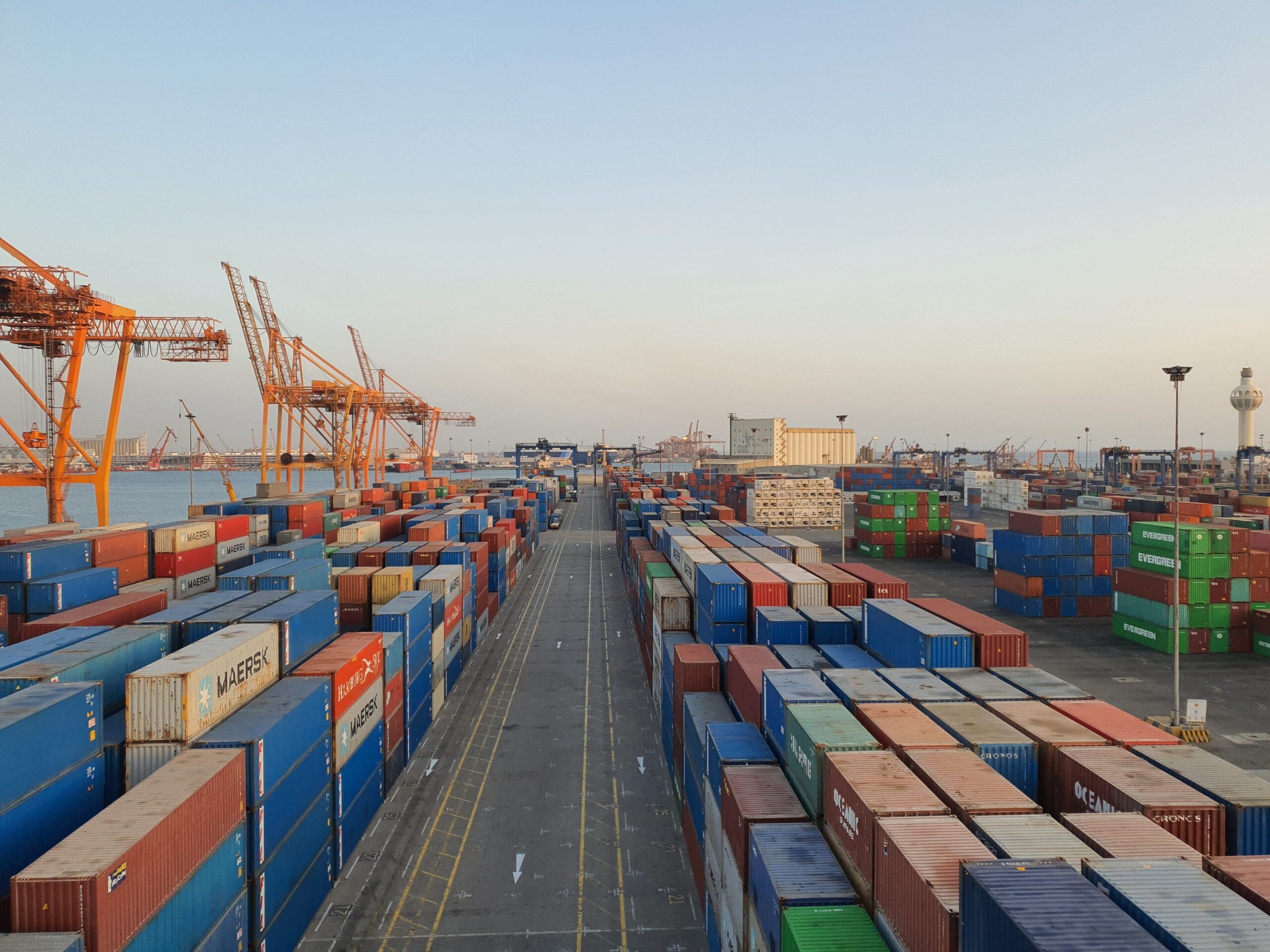
Compare typical ocean transit times from China and from Guatemala to key ports in North America and Europe.
Most latex pet toys are sourced from China, and most rubber gloves from Malaysia. Here is how Guatemala compares with both.
| China | Malaysia | Guatemala | |
|---|---|---|---|
| Typically sourced for | Pet toys and consumer goods | Rubber and latex gloves | Latex pet toys and gloves |
| Transit to US East & Gulf Coast | 34–46 days door to door | 28–36 days port to port | 3–7 days at sea |
| Transit to US West Coast | 23–31 days door to door | 18–25 days port to port | ≈11 days at sea |
| Transit to Northern Europe | 30–51 days | Via Suez or Cape | ≈3 weeks |
| US tariff: latex pet toys | 4.3% + 25% + 12.5% = 41.8% | 4.3% + 10% = 14.3% | 0% + 10% = 10% |
| US tariff: medical gloves | 0% + 100% + 12.5% = 112.5% | 0% + 10% = 10% | 0% + 10% = 10% |
| US tariff: industrial gloves | 3% + 25% + 12.5% = 40.5% | 3% + 10% = 13% | 0% + 10% = 10% |
| Time difference (US Eastern) | 12–13 hours ahead | 12–13 hours ahead | 1–2 hours |
| Time difference (UK & Central Europe) | 6–8 hours ahead | 6–8 hours ahead | 6–8 hours behind |
| Flight from Miami or Houston | 20+ hours | 20+ hours | ≈2.5 hours direct |
| Middle East shipping corridors | On Europe and some East Coast routes | On Europe and some East Coast routes | Avoided on Atlantic routes |
Tariffs shown as: base duty + Section 301 China duty + 2026 forced-labour duty (12.5% China, 10% Malaysia and Guatemala). Guatemala base rates assume CAFTA-DR originating goods. Industrial gloves shown at the 3% base rate for seamless gloves; some glove types carry 14%. Indicative figures, September 2026. Rates depend on exact product classification, and we confirm them for your products in every proposal.
Produce days, not weeks, from your customers in North America.
Shorter routes reduce freight spend and the cost of holding inventory in transit.
Fewer sea miles mean a smaller carbon footprint for every shipment.
Respond faster to demand changes, reorders and new product launches.
Visit, audit and develop products in person without long-haul travel.
Atlantic routes from Guatemala to the US East Coast, Gulf and Europe avoid the Middle East shipping corridors, reducing exposure to the disruption affecting Asian supply chains.

Nearshoring only works with the right manufacturing partner. We combine decades of hands-on latex manufacturing experience with an in-house technical team that understands the standards of each industry and market we serve.
Nearshore manufacturing is the practice of producing goods in a country close to your end market rather than in a distant region such as Asia. For North American companies, Central America and Mexico are the most common nearshoring locations.
Offshoring moves production to a distant, usually lower-cost country. Nearshoring moves it to a nearby country, trading some of the distance for faster delivery, easier oversight and lower supply chain risk.
Guatemala offers access to natural latex, an experienced manufacturing workforce, short sea routes to the US East and Gulf coasts, and preferential trade access to the US under CAFTA-DR and to Europe under the EU–Central America Association Agreement.
Qualifying goods enter the US free of standard duty under CAFTA-DR. Since July 2026, most Guatemalan goods also carry an additional 10% Section 301 duty. This is significantly lower than the combined duties on equivalent products from China, and the CAFTA-DR base-duty exemption gives an advantage over Malaysia on industrial gloves. We confirm the applicable rates for your products in every proposal.
Typical ocean transit is around 3 days to Miami, 4 days to Savannah, 11 days to Long Beach and around 3 weeks to Northern Europe, depending on carrier and schedule.
Malaysia is the world’s largest rubber glove producer. Guatemala offers much shorter transit to the US East and Gulf coasts, aligned time zones, Atlantic shipping routes that avoid the Middle East corridors and, for industrial gloves, duty-free base rates under CAFTA-DR.
Yes. We manufacture for brands and distributors across North America and Europe.
Share your current product, volumes and supply route, and we’ll prepare a landed-cost comparison.